
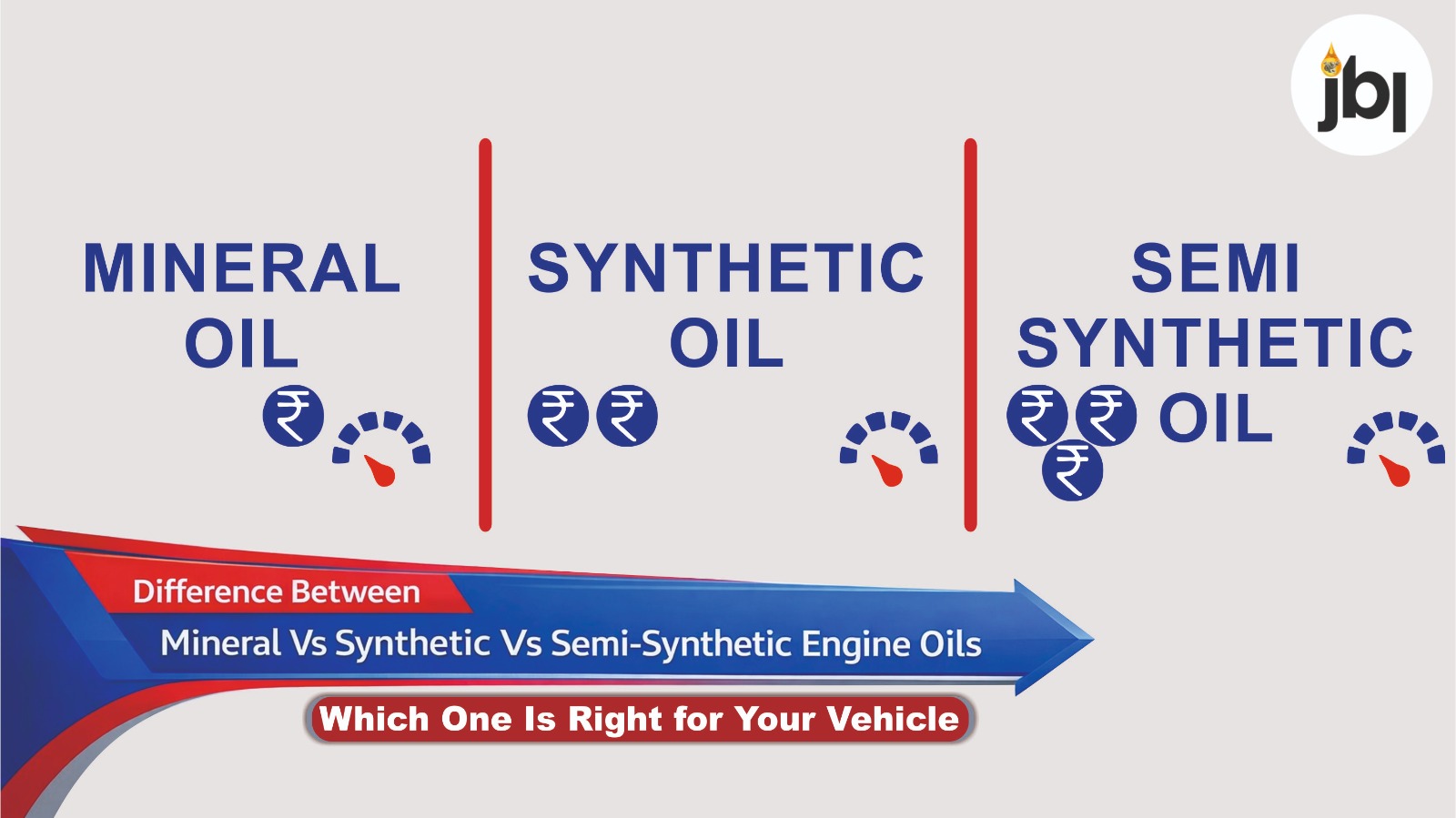
When you go for a bike or car service, the mechanic usually asks one question:
Which oil do you want — mineral, semi-synthetic, or fully synthetic Engine oil?
Most vehicle owners get confused here.
Many people simply choose the cheapest or the most expensive option without knowing what it actually means.
But the truth is, the wrong engine oil can slowly reduce performance and even shorten engine life.
This simple guide will help you understand the difference and choose the right oil for your vehicle.
First Understand: What Engine Oil Actually Does
Engine oil is not only for lubrication. It performs several important jobs inside the engine:
The main work of engine oil is to reduce friction between moving parts, clean dirt and carbon deposits, protect the engine during cold start, and prevent rust and corrosion. If in any case your engine oil quality is not good, the engine works harder, heats up
Mineral Engine Oil
What is Mineral Engine Oil?
Mineral engine oil is refined directly from crude petroleum.
It is the most basic and traditional type of engine oil.
Advantages
- -: Affordable price
- -: Suitable for older engines
- -: Good for low-usage vehicles
- -: Easily available
Disadvantages
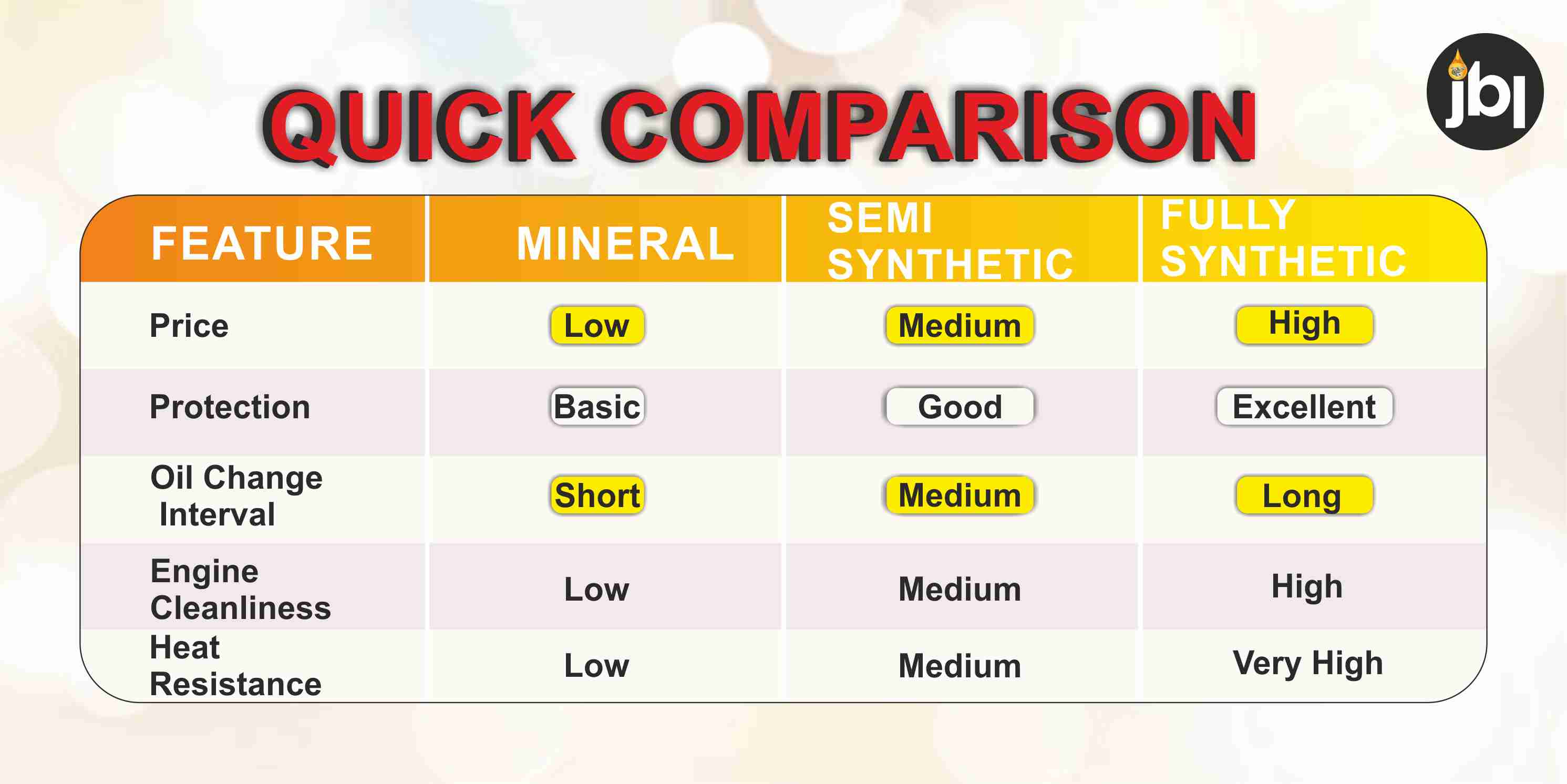
- -: Breaks down faster in high temperatures
- -: Requires frequent oil changes
- -: Lower protection in heavy traffic conditions
Best For
- -: Old motorcycles and cars
- -: Low daily running vehicles
- -: Short-distance riders
Semi-Synthetic Engine Oil
What is Semi-Synthetic Engine Oil?
Semi-synthetic oil is a blend of mineral oil and synthetic oil.
It offers a balance between performance and cost.
Advantages
- -: Better protection than mineral oil
- -: Handles heat more effectively
- -: Cleaner engine operation
- -: Longer oil change interval
Disadvantages
- -: Slightly costlier than mineral oil
- -: Not as high-performance as a fully synthetic
Best For
- -: Daily commutinG by bike
- -: City driving conditions
- -: Most Indian vehicles
For many users, this is the most practical and value-for-money option.
Fully Synthetic Engine Oil
What is Fully Synthetic Engine Oil?
Fully synthetic oil is chemically engineered in laboratories.
Its molecules are uniform and highly stable.
Advantages
- -: Maximum engine protection
- -: Excellent performance in extreme temperatures
- -: Better mileage and smoother pickup
- -: Longer service interval
Disadvantages
- -: Higher price
- -: Not always necessary for older engines
Best For
- -: New vehicles
- -: High-performance bikes and cars
- -: Long highway drives
Common Mistakes Drivers Make
Many vehicle owners believe “thicker oil gives better protection
This is a very common misunderstanding. Engine oil is not chosen by thickness alone — it
must match the engine design and the manufacturer's recommendation.
Every vehicle manufacturer specifies a particular engine oil grade, such as 10W30 engine oil, 20W40 engine oil, or 5W40 engine oil, based on engine clearances, temperature conditions, and performance requirements. Choosing the right fully synthetic engine oil for bike is equally important, as it ensures better lubrication and engine efficiency. In fact, using a high-quality fully synthetic engine oil for bike can significantly improve engine life and performance. Using a thicker oil than recommended does not increase safety; instead, it can reduce oil flow during cold start, cause poor lubrication, and even increase engine wear.
For example, if a modern bike designed for 10W30 engine oil is filled with heavier 20W40 engine oil, the oil may not circulate quickly in the engine during startup. This is why many experts recommend 10W30 fully synthetic engine oil for modern bikes, as it provides faster circulation, superior protection, and improved fuel efficiency. Choosing the correct fully synthetic engine oil for bike helps avoid extra friction, improves mileage, and ensures smoother pickup. On the other hand, some older engines with larger internal clearances may perform better with 20W40 engine oil, which provides a stable lubricating film at higher temperatures.
Therefore, the correct approach is simple — always follow the owner’s manual engine oil grade recommendation.
The engine oil grade matters far more than the price or brand. Choosing the right viscosity ensures smooth performance, better fuel efficiency and longer engine life.
Final Conclusion
All three engine oils are useful when used in the correct situation.
The goal is not to buy the most expensive oil.
The goal is to use the right engine oil for your bike.
Proper oil selection and timely service help:
- -: smoother performance
- -: better mileage
- -: longer engine life
A clean engine with the right lubricant always performs better.
